BRENDEN JONGMAN

Why the ability to change direction is the defining challenge of our time.

I write about how individuals, companies, and nations lose the structural capacity to change direction, and what it takes to build it back. My work draws on fifteen years advising governments on climate risk and disaster preparedness at the World Bank, fieldwork across twenty countries, and a growing conviction that the greatest threat in a volatile world is not failure but the narrowing that comes from success.

Brenden Jongman

Focus

I am writing a book called Latitude: The Risk of Getting Everything Right, examining how the forces that make individuals, companies, and nations successful are often the same forces that eliminate their alternatives. The book applies a single structural framework across AI, climate change, geopolitics, and individual careers. Alongside the book, I continue my applied work on climate resilience and disaster risk at the World Bank.

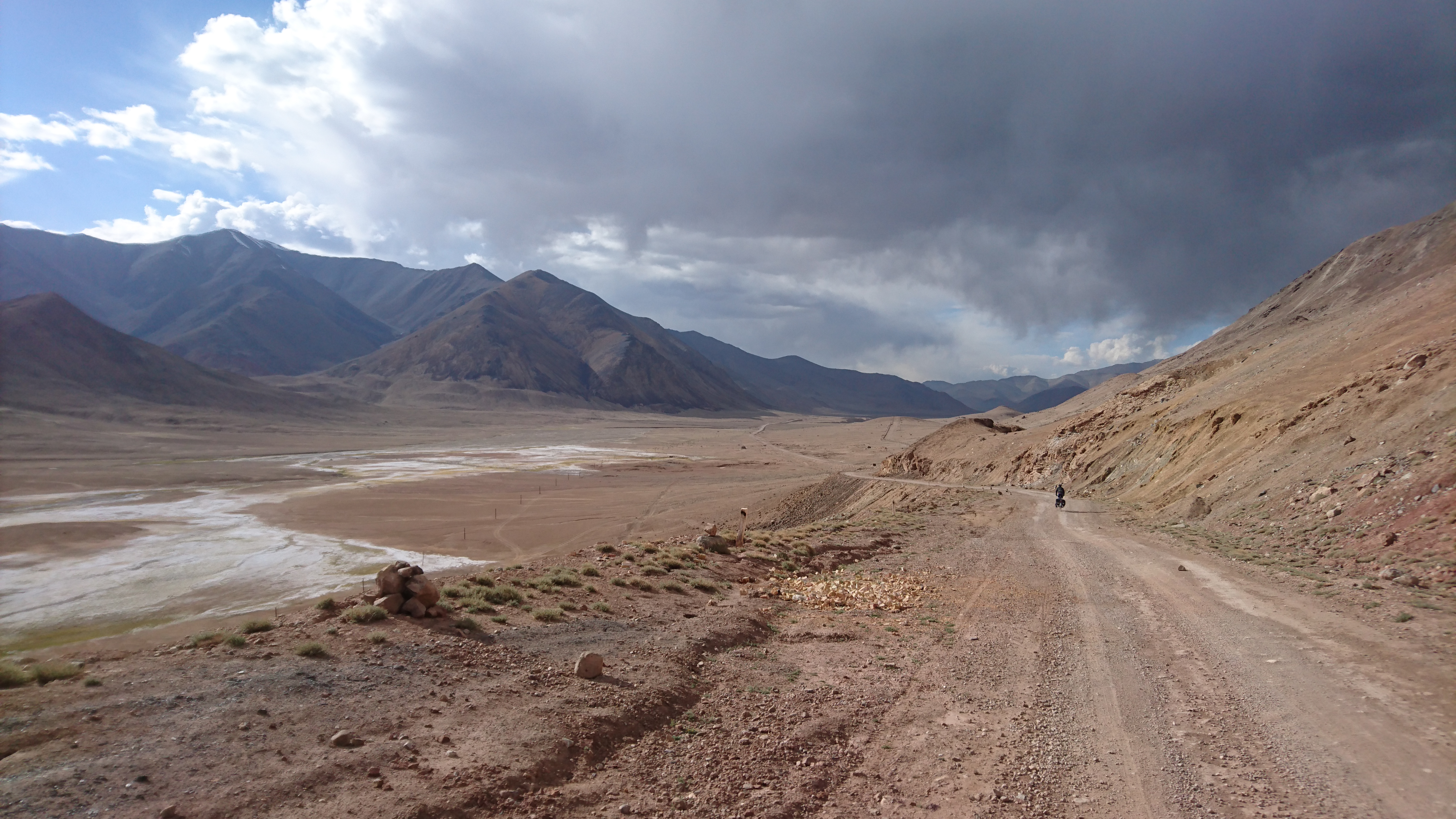
The Pamir Highway, Tajikistan

AI is rewriting entire professions in months. Climate disruption is accelerating beyond the models. Geopolitical alliances that held for decades are fracturing. The world is shifting faster than most individuals, companies and nations can respond, and the traditional answers are not keeping up. Specialization, the strategy that built careers and economies for generations, is becoming a liability when the field you specialized in disappears. Resilience, the ability to bounce back, assumes you have somewhere to bounce to.

Something deeper is missing from how we think about navigating a volatile world. Not the ability to recover from a shock, but the structural capacity to change direction before you are forced to. I call this latitude.

Latitude is the number of viable paths genuinely accessible to you at any given moment. It is shaped by how reversible your commitments are, how deep and diverse your capabilities run, how portable your resources and reputation are, and whether you have the reserves and bandwidth to act when the moment demands it.

Drawing on fifteen years advising governments on climate risk and disaster preparedness, fieldwork across more than twenty countries, and extensive academic research, I am writing a book that examines how latitude is built, how it erodes, and why the forces that narrow it are often the same forces that once made us successful.

The book applies a single structural framework to individual careers, corporate strategy, national security and planetary systems. It asks why Detroit collapsed while Pittsburgh reinvented itself, why five centuries of flood defence may have made the Netherlands the most locked-in nation on Earth, why the companies building AI are simultaneously the smartest and the most structurally trapped, and how climate adaptation and biodiversity loss are fundamentally problems of narrowing options.

For updates on the book and related essays, follow me on:

LinkedIn X / Twitter
Nature Cover - High and Rising

Academic & Research Publications

+

Speaking Topics

Adaptation in an age of climate and biodiversity loss

Risk, resilience, and decision-making under uncertainty

Lessons from cities and countries facing climate extremes

Nature-based solutions and long-term resilience

Brenden Jongman speaking
Brenden Jongman

Brenden Jongman works on climate resilience, systemic risk, and adaptation, with a focus on how people, systems, and nature respond to change under real-world constraints. He has led major programs at the World Bank, including global initiatives on nature-based solutions and disaster risk financing, and has previously worked with the Red Cross and the European Commission, as well as in academic research and teaching at VU University Amsterdam.

Alongside his applied work, Brenden publishes in academic and policy journals and contributes essays and commentary to broader audiences. His research and writing have appeared in leading scientific journals and international media, including Nature, PNAS, and Nature Climate Change, as well as outlets such as the BBC, CNN, and The New York Times. He has presented his work to academic, policy, and practitioner audiences ranging from universities to international conferences and government forums. Across these settings, his aim is less to advocate for fixed solutions than to develop and test ideas about adaptation, resilience, and decision-making under rapid change.

Brenden holds a PhD in climate risk management from VU University Amsterdam and an MSc in Management from London Business School, and has worked for more than 15 years at the intersection of research, policy, and implementation. He has spent extended periods traveling and working in fragile and rapidly changing regions, experiences that continue to inform his approach.

Originally from the Netherlands, Brenden has lived and worked across Europe, Africa, Latin America, and North America. He works across multiple languages and currently lives in Mexico City with his wife and two daughters.

For speaking invitations, media inquiries, or general correspondence, please use the form below.